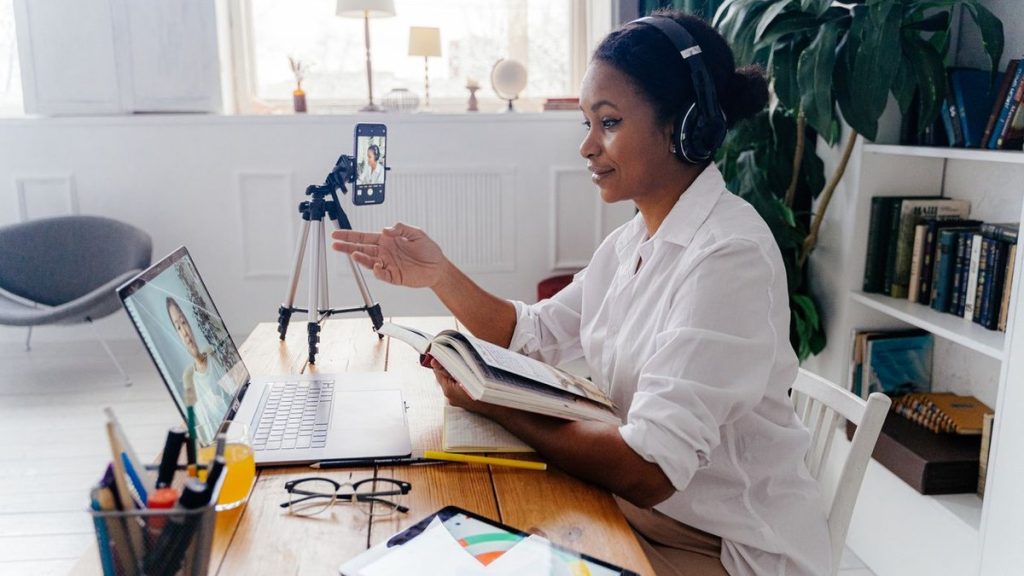
Is online therapy effective? For most common concerns, the honest answer is yes, with a real caveat worth knowing before you book. If you’re weighing a video call with a therapist against driving to an office, the research is more reassuring than you might expect. For anxiety, depression, and PTSD specifically, several recent studies have found that online therapy produces outcomes close to in-person care. The caveat is that “close to” isn’t “identical,” and the right setup still depends on what you’re working through.
Is Online Therapy Effective for Anxiety, Depression, and PTSD?
The strongest recent evidence comes from a six-year study inside Sweden’s public mental health system, tracking more than 2,300 patients through the shift to remote care during the COVID-19 pandemic. Visits moved online fast, from about 4% before the pandemic to nearly half during it, and recovery rates barely moved. Depression recovery held around 38%, generalized anxiety around 56%, OCD around 46%, and PTSD around 59%, almost identical before and after the shift to video sessions.
An earlier, large-scale study out of Cambridge found something similar for phone-delivered cognitive behavioral therapy. Looking at more than 39,000 adults with mild to moderate depression and anxiety, people getting CBT by phone improved about as well as those seen in person, outside of the most severe cases. Phone sessions also ran about a third cheaper per visit, which matters for people weighing cost against convenience.
Where the Evidence Gets More Complicated
Not every study lands the same way, and a good source doesn’t pretend otherwise. A 2025 study in the journal Frontiers in Psychology followed 187 university students in Barcelona who chose either face-to-face or online sessions with the same therapist. Both patients and the therapist rated in-person sessions as more effective, and symptom scores improved more for the in-person group. The researchers were upfront about why that finding deserves some caution. The sample was small, everyone picked their own format rather than being assigned one, and a single therapist saw every participant.
Put the two pictures together and a pattern starts to show up. Larger studies that track real-world outpatient care over years tend to find telehealth holding its own. Smaller studies looking at one therapist or one setting sometimes find a modest edge for being in the same room. Neither result cancels the other out. They’re measuring different things, and both are worth knowing before you decide.
What Actually Seems to Make Therapy Work, Either Way
The researchers behind the Swedish study had a theory worth repeating. What seems to matter most isn’t the screen itself. It’s whether the clinic is actually using evidence-based treatment, following up consistently, and building real trust with the client. A webcam doesn’t substitute for any of that on its own, and it doesn’t need to. Good therapy travels reasonably well through video when the fundamentals underneath it are solid.
That tracks with how GHCS clinicians already approach both formats. Whether a session happens at one of our Houston-area offices or over telehealth anywhere in Texas, the same licensed clinician, the same treatment approach (CBT, EMDR, and other evidence-based methods depending on what you’re working on), and the same follow-up plan carry through. Our own post on the practical benefits of telehealth covers the scheduling and accessibility side of this in more detail.
When In-Person Might Be the Better Fit
Both studies above are honest about where telehealth’s evidence gets thinner. The Swedish research excluded children, people in acute psychiatric crisis, and people with severe psychotic disorders, populations that may need in-person care more reliably. The Cambridge study’s benefit didn’t hold for the most severe depression and anxiety cases. And telehealth simply requires things not everyone has on hand, a private room, a stable connection, and enough comfort with a screen to actually open up during a session.
None of this means telehealth is second-best by default. It means the fit is specific to you, not a blanket rule either direction. A licensed clinician can help you sort out which format actually serves what you’re dealing with right now, which is a conversation worth having before you book rather than guessing on your own.
How Telehealth Actually Works at GHCS
Texas-licensed clinicians can only treat clients who are physically in Texas at the time of the session, including by telehealth. That’s a licensing rule, not a GHCS preference, so our telehealth appointments are available anywhere in Texas, not nationwide. If you’re in Houston, Austin, San Antonio, or anywhere else in the state, you can be matched with a GHCS clinician and switch between video and in-person sessions at one of our five Houston-area offices if your needs or your schedule change. Not sure which setup or which clinician is the right starting point? Our Find Your Fit quiz is a quick way to narrow that down, and our free Wellness Library tools are there if you want something to start working through on your own before your first appointment.
Frequently Asked Questions
Is online therapy as effective as in-person therapy for anxiety and depression?
For mild to moderate anxiety and depression, several large studies have found outcomes close to in-person care. Results get less clear for more severe symptoms, which is one reason an initial conversation with a licensed clinician matters more than picking a format on your own.
Does insurance cover telehealth therapy the same way it covers in-person sessions?
Most major Texas insurance plans, including the ones GHCS works with, now cover telehealth sessions similarly to in-person visits, though exact coverage depends on your specific plan. It’s worth confirming your benefits before your first appointment.
Can I switch between telehealth and in-person sessions at GHCS?
Yes. Many GHCS clients move between video sessions and one of our five Houston-area offices (Cypress, Katy, Memorial, Richmond, and Spring) depending on their schedule or what feels right that week.
Is telehealth therapy available everywhere in Texas, or just Houston?
Telehealth with a GHCS clinician is available anywhere in Texas, not just the Houston metro. Texas licensing rules require you to be physically located in Texas at the time of your session, so this covers the whole state, not outside it.
If you’re trying to decide between a video session and an in-person one, you don’t have to work it out alone. Book an appointment with GHCS and talk it through with a clinician who can help you figure out what actually fits, or call 832-717-7166 to ask questions first.